


Elba Island in 3 Days
Complete Itinerary
Visiting Elba Island in 3 days means choosing your stops carefully and organising your journeys by geographical area. Distances may seem short in kilometres, but the coastal roads are often winding, pass through built-up areas and take longer to travel than a map might suggest.
This itinerary focuses on eastern Elba on the first day, Portoferraio and the northern coast on the second, and the western side and Monte Capanne on the third. It is not a rigid schedule: sea conditions, traffic, parking and opening hours may require some adjustments.
It is not realistic to see every village and beach in three days. The aim is to discover the island’s main landscapes by combining mining heritage, historic centres, the sea and nature, without spending most of the day in the car.

Elba Island 3-Day Itinerary at a Glance
- Day one: Rio Marina, mining landscapes, Porto Azzurro and Capoliveri.
- Day two: Portoferraio, Napoleonic heritage and a beach on the northern coast.
- Day three: Marciana, Monte Capanne, Marciana Marina or a beach on the western coast.
How to Plan Three Days on Elba Island
A car is recommended for following this itinerary. Public transport serves the island’s main towns, but it can make it difficult to combine hilltop villages, beaches and inland destinations in a single day. Timetables and service frequency also vary by season.
Ferries depart from Piombino and mainly travel to Portoferraio, Rio Marina and Cavo. Portoferraio generally has the most connections, while Rio Marina and Cavo may be convenient for travellers staying on the eastern side. Crossing times, service availability and vehicle boarding requirements should be checked for your actual travel dates on the page dedicated to ferries to Elba Island and on the ferry operators’ websites. The routes and estimated journey times published by Toremar confirm connections from Piombino to Portoferraio, Rio Marina and Cavo.
With only three days available, it is best to avoid changing accommodation. Using a single base reduces the time spent checking in and out, leaving more time for sightseeing.
How Much Time to Allow for Travelling
The itinerary should take into account not only the distance in kilometres but also the type of road. The western stretch between Marciana Marina, Sant’Andrea, Pomonte and Marina di Campo includes numerous bends. Journeys to Capoliveri, Marciana and other hilltop villages may also take longer during the busiest periods.
In July and August, it is advisable to set off early in the morning. Car parks near the best-known beaches can fill up quickly, and traffic increases in the late afternoon when many people leave the coast at the same time.
What to Keep in the Car
- Water and sun protection, especially for mines, trails and exposed villages.
- Comfortable shoes for steps, uneven surfaces and sloping historic centres.
- A mask and snorkel for stops at beaches suitable for snorkelling.
- A light jacket for Monte Capanne, where the temperature and wind may differ from conditions on the coast.
- Water shoes for shingle, pebble or rocky beaches.
Day 1
Rio Marina, Porto Azzurro and Capoliveri
The first day is dedicated to the eastern side of the island, shaped by its mineral deposits and characterised by a landscape unlike the granite coastline of western Elba. The itinerary combines a cultural visit, a short stop by the sea and two villages that can be reached without crossing the entire island.

Morning in Rio Marina
Rio Marina is centred around its harbour and is one of the main places to discover Elba’s mining history. You can explore the town on foot, walking along the seafront and through the streets near the Torre degli Appiani.
The visit may include the Museum of Minerals and Mining Art or an excursion into the former mining areas. Activities at the mining sites follow specific schedules and procedures: check opening times, duration, booking requirements and the meeting point before setting off.
Allow around two hours to visit the town and museum. A guided mining excursion takes longer and may occupy much of the morning. Closed shoes, water and a hat are recommended because the ground may be dusty and uneven, with little shade in some areas.
Those who would like to explore the subject further can consult the guide to the mines of Elba Island, which is useful for comparing museums, mining parks and available experiences in the Rio and Capoliveri areas.

Stop at a Beach in Eastern Elba
After Rio Marina, it is best to choose just one nearby beach to avoid making the route too long. Ortano, Cala Seregola and Topinetti are among the options on the eastern side. Your choice will depend on your starting point, the wind, parking availability and how much time you wish to spend by the sea.
Beaches in this area may feature shingle, dark sand, pebbles and mineral fragments. They do not all offer the same facilities, and some services operate only during the bathing season.
To keep the itinerary manageable, a stop of around two hours is generally sufficient. Travellers who would rather spend longer on the beach can skip one of the two villages planned for the afternoon.

Afternoon in Porto Azzurro
Porto Azzurro is ideal for a one- or two-hour walk around the harbour, seafront and town-centre streets. After leaving the car in one of the car parks outside the central area, you can complete the entire visit on foot.
In summer, traffic arrangements and parking availability may change throughout the day. It is wise to follow local signs and avoid insisting on finding a space close to the seafront, especially in the evening.
Those who prefer to spend more time in town can stay for dinner. Alternatively, continue to Capoliveri before the busiest period of the day.

Evening in Capoliveri
Capoliveri is a hilltop village of narrow lanes, steps, squares and sloping passageways. Its historic centre is compact, but comfortable shoes are essential, and it is not fully suitable for visitors with limited mobility.
Allow around two hours for a walk through the centre, in addition to time for dinner. Most car parks are located outside the historic core; during the high season, you may need to leave the car farther away and continue on foot.
It is possible to visit Porto Azzurro and Capoliveri on the same day because the two towns are relatively close, but it is not essential. With young children or after a long mining excursion, choosing just one is more realistic.
Day 2
Portoferraio and the Northern Coast
The second day includes the island’s main historic centre and a stop on the northern coast. Portoferraio deserves at least half a day: starting your visit in the morning means cooler temperatures for walking and a better chance of finding parking.

Historic Centre and Medici Fortresses
Portoferraio extends around the Darsena Medicea harbour and across a headland protected by an extensive system of fortifications. From the harbour, sloping streets, ramps and steps lead up into the historic centre.
The route may include the Linguella area, the harbour, the streets of the historic centre and the Medici Fortresses. Allow at least three hours for a visit without entering any museums. Adding a Napoleonic residence or museum may extend your stay into the early afternoon.
Visitors with limited mobility should be aware of the changes in elevation and uneven surfaces. Some areas are easier to reach than others, but the full route through the upper part of town includes several uphill sections.

Palazzina dei Mulini or Villa San Martino
The two main residences associated with Napoleon’s time on Elba are Palazzina dei Mulini, in the upper part of the historic centre, and Villa San Martino, located inland from Portoferraio.
For a three-day itinerary, it is best to choose one. Palazzina dei Mulini fits more easily into a walk around the town centre, while Villa San Martino requires a journey by car.
Palazzina dei Mulini reopened to the public on 20 June 2026 following restoration work. Opening hours, last admission, closing days and accessibility should nevertheless be checked again on the Italian Ministry of Culture’s official website before visiting.

Pomeriggio in una spiaggia della costa nord
Dopo la visita di Portoferraio si può scegliere una spiaggia della costa settentrionale. Non è consigliabile inserirne più di una: parcheggio, accesso e tempo necessario per raggiungerla ridurrebbero eccessivamente la durata della sosta.
- Le Ghiaie: vicina al centro di Portoferraio e adatta a chi vuole limitare gli spostamenti.
- Capo Bianco: caratterizzata da ciottoli chiari e raggiungibile tramite una scalinata.
- Padulella: piccola baia vicina a Portoferraio, con accesso da verificare in base al punto di arrivo scelto.
- Sansone: spiaggia di ciottoli con tratto finale a piedi e disponibilità limitata di parcheggio nella zona di accesso.
Capo Bianco e Padulella sono pratiche se si desidera rimanere nei dintorni di Portoferraio. Sansone richiede una maggiore organizzazione e, nei periodi più frequentati, è consigliabile raggiungerla nelle prime ore del mattino anziché dopo la visita della città.
Chi vuole confrontare altre alternative può consultare la guida alle spiagge più belle dell’Isola d’Elba, valutando accesso, fondale e posizione rispetto alle tappe dell’itinerario.
Day 3
Marciana, Monte Capanne and the Western Coast
The third day is dedicated to the western part of the island, dominated by the Monte Capanne massif. This area features mountains, woodland, hill villages and a rugged coastline. Journeys take longer than the distances shown on a map might suggest.

Morning in the Village of Marciana
Marciana lies on the slopes of Monte Capanne in north-western Elba. The village is made up of narrow lanes, steps, covered passageways and steep streets. A walk of around one hour is enough to cross the historic centre and reach the area around the Fortezza Pisana.
The centre is not the easiest stop for pushchairs or visitors with limited mobility. Before beginning your visit, consider where you park, as some access routes involve uphill sections.
Marciana can be combined with Monte Capanne or a walk through nearby Marciana Marina. Trying to include both towns, the mountain and a beach on the same day would make the schedule too crowded.

Climbing Monte Capanne
Monte Capanne rises to 1,019 metres and is the highest peak on Elba Island and in the entire Tuscan Archipelago. The municipality of Marciana occupies the mountainous north-western part of the island.
Climbing on foot requires time, preparation and appropriate equipment. For travellers with only three days available, a complete hike may occupy most of the day. Trails, elevation gain and duration should be assessed according to the participants’ experience.
Alternatively, check whether the lift from Marciana is operating. Services, opening hours and the time of the last descent are subject to change and weather conditions, so they must be confirmed directly before your visit.
Even in summer, bring water, sun protection and a light extra layer. The wind may be stronger at higher elevations, and visibility can change quickly. If there are low clouds, thunderstorms or adverse conditions, it is best to abandon the ascent.
Those who want to devote a more active day to the mountain can learn more about routes and preparation in the guide to hiking on Elba Island.

Alternative: Marciana Marina
Travellers who do not wish to climb Monte Capanne can head down towards Marciana Marina. The town is ideal for a walk along the seafront and offers a less demanding stop than the mountain routes.
The centre can be visited in around two hours. In summer, allow for heavier traffic and limited availability in the car parks closest to the sea.
From Marciana Marina, you can continue towards Procchio and Portoferraio or follow the western coast. Choose your direction based on the departure port for the following day or your ferry time, avoiding an unnecessary circuit of the island.
Alternative: A Beach on the Western Coast
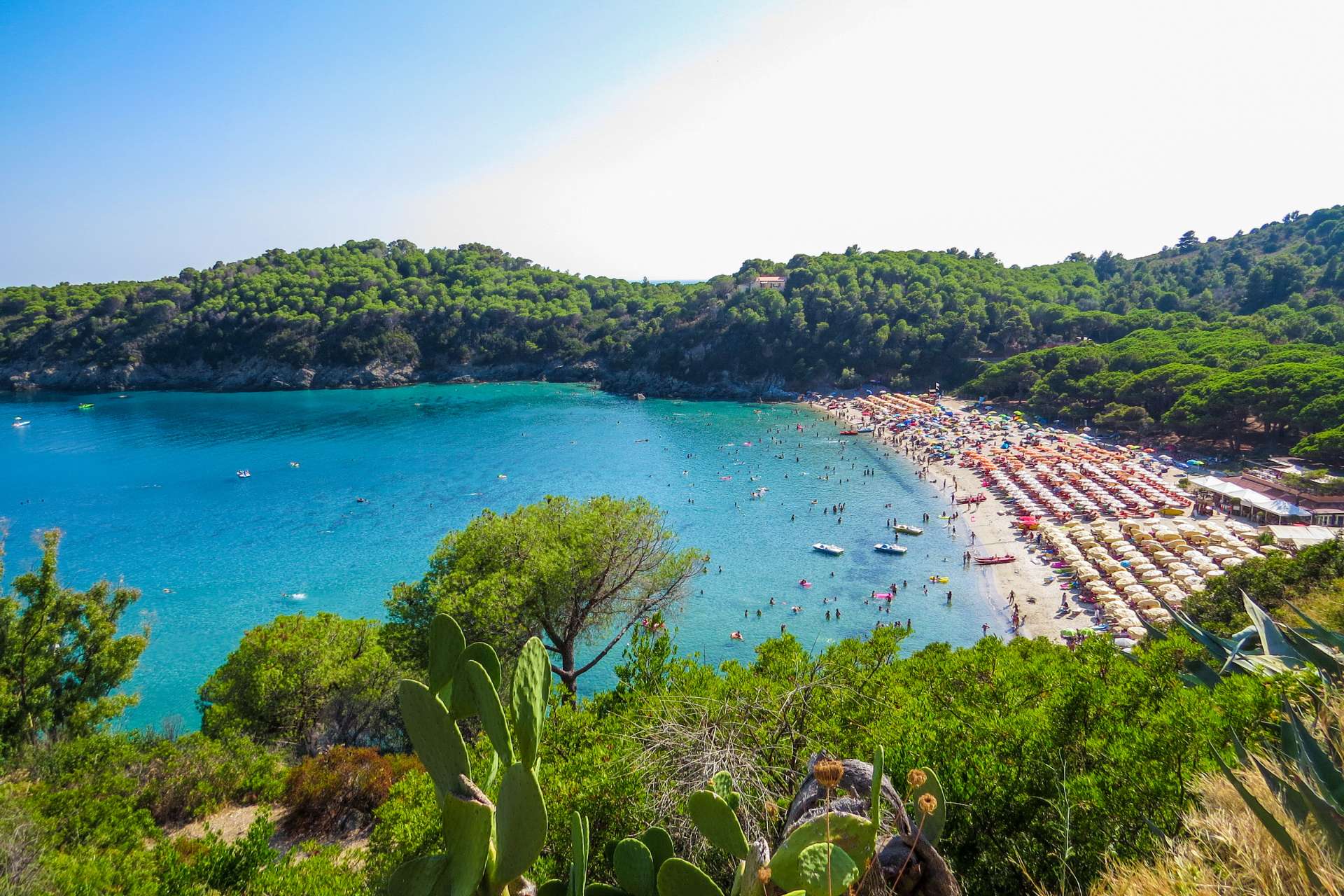
If the weather is stable and you would rather spend time by the sea, dedicate the afternoon to a beach such as Sant’Andrea, Fetovaia, Cavoli or Procchio. Your choice should take the planned return route into account.
- Sant’Andrea: convenient for combining time by the sea with the north-western coast.
- Fetovaia: a sandy bay that is very popular during the high season.
- Cavoli: a south-facing beach that becomes particularly crowded during the summer months.
- Procchio: convenient for returning to Portoferraio through the central part of the island.
In July and August, it is unwise to arrive around midday expecting to find a space easily near the beach. Car parks, shuttle services and facilities may change during the season.
How to Adapt the Itinerary to Your Ferry Times
The first and third days are often shorter because they depend on arrival and departure times. In these cases, reduce the number of stops instead of trying to fit them all in by rushing your visits.
Arriving in Portoferraio
Travellers arriving in Portoferraio in the late morning can spend the first day exploring the historic centre and a nearby beach. The eastern itinerary can be moved to the second day, potentially skipping the western coast.
Arriving in Rio Marina
Travellers arriving in Rio Marina can begin directly with the town, the mining museum or an eastern beach. Porto Azzurro and Capoliveri can be reached in the afternoon without travelling through Portoferraio.
Departing in the Afternoon
On the day of departure, it is best to remain on the same side of the island as your ferry port. Travellers leaving from Portoferraio can visit the historic centre, Le Ghiaie or another nearby destination. Those departing from Rio Marina should avoid an excursion to Monte Capanne or a beach on the western coast.
Make sure you arrive for boarding as early as required by the ferry operator, especially when travelling with a vehicle.
Elba Island in 3 Days with Children
Families can follow this itinerary, but it should be simplified. Villages such as Capoliveri and Marciana include steps and sloping stretches, while some beaches on the northern coast require walks that are unsuitable for pushchairs.
With young children, plan just one cultural visit and one beach stop per day. Mining excursions should be selected based on any minimum age requirements, their duration and the conditions along the route.
For the second day, Le Ghiaie may be easier than beaches reached by trails or long flights of steps. On the third day, Marciana Marina is a less demanding alternative to climbing Monte Capanne.
- Avoid the longest journeys around midday.
- Check for toilets and places to buy food and drinks.
- Bring water, a hat and a change of clothes for the beach.
- Do not schedule two hilltop villages in the same half-day.
- Check beach accessibility before setting off.

What to Do on Elba Island in Three Days When It Rains
In unsettled weather, time at the beach can be replaced with museums, villages and cultural visits. The options most consistent with this itinerary are the Museum of Minerals in Rio Marina, the Napoleonic residences, Portoferraio’s historic centre and the towns of Porto Azzurro and Capoliveri.
Rain can make steps, paved streets and trails slippery. The ascent of Monte Capanne and excursions along exposed routes should be postponed in the event of thunderstorms, strong winds or poor visibility.
Museum opening hours, guided tours and indoor activities should be checked on the day itself, as they may change according to the season or due to exceptional circumstances.
Best Time to Visit Elba Island for 3 Days
May, June, September and early October are suitable for an itinerary combining beaches, villages and walks. Temperatures are generally more favourable for travelling around than during the peak summer weeks.
In spring, some beach facilities may not yet be operating. Between September and October, museums, excursions and transport services may follow reduced timetables, so opening times should be checked.
July and August offer a wider range of tourist services but also bring heavier traffic, larger crowds and more difficulty finding parking. During these months, book your ferry in advance, begin your visits early and avoid including too many stops in a single day.
During winter, the itinerary must be adapted to reduced services and more variable weather. Villages, coastal walks and some museums remain the main activities, but opening times should never be taken for granted.
Practical Tips for Saving Time
- Group stops by area: avoid travelling repeatedly between the eastern and western coasts.
- Start early in the morning: it is easier to find parking and explore villages in cooler temperatures.
- Choose just one beach per day: access and searching for parking take time.
- Check the wind: it can affect sea conditions and make one coast preferable to another.
- Check opening times: museums, mines, lifts and seasonal services may change their schedules.
- Leave some flexibility in your plans: traffic, stops and weather conditions can extend journey times.
- Do not rely solely on your satnav: the shortest road may not be the most practical during the high season.

Where to Stay to Explore the Island
For a short stay, it is useful to choose one base and organise each day by area. Ortano Resort, on the eastern coast, provides access to Rio Marina, Porto Azzurro, Capoliveri and the beaches in the east, with Portoferraio and western Elba planned as separate day trips. This approach reduces repeated journeys across the island and allows you to adjust the itinerary according to the wind, traffic and opening hours.
Frequently Asked Questions About Elba Island in 3 Days
Three days are enough to discover the island’s main landscapes, but not to visit every village and beach. Choose a different area for each day and limit unnecessary journeys.
A car is recommended because it offers greater flexibility when reaching beaches, hilltop villages and inland destinations. If using public transport, it is best to reduce the number of stops and focus on the main towns.
Portoferraio generally has the most connections and is convenient for the central and northern parts of the island. Rio Marina and Cavo are useful for travellers staying in the east. Choose by comparing timetables, availability and the port closest to your accommodation.
It is best to choose one beach in each area you visit: one on the eastern coast, one near Portoferraio and one on the western side. Including several beaches in the same day increases the time spent travelling and searching for parking.
Yes, but the ascent should be treated as the main activity of the day. Hiking to the summit requires preparation and enough time. Using the lift, if preferred, depends on its operating schedule and weather conditions.
With young children, it is best to remove stops involving long trails, numerous steps or overly busy days. Portoferraio, Rio Marina, Porto Azzurro and Marciana Marina can be combined with beaches offering easier access.
It depends on your arrival port and the location of your accommodation. Travellers arriving or staying in the east can begin with Rio Marina, Porto Azzurro and Capoliveri. Those arriving in Portoferraio can dedicate their first day to the town and northern coast.
The total depends on the location of your accommodation and the options you choose. Rather than calculating the overall distance, focus on avoiding repeated journeys across the island and group together destinations on the same side.